
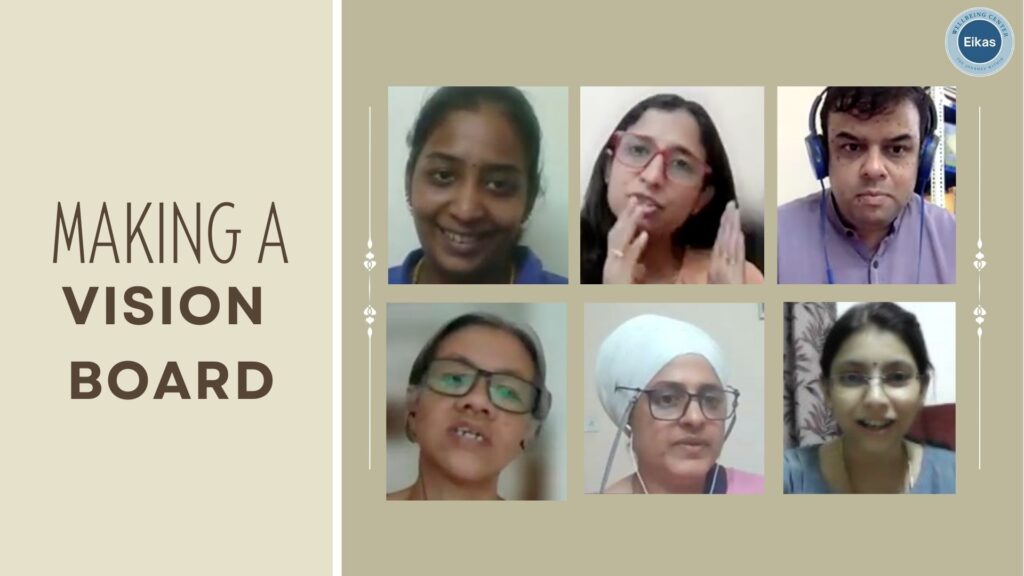
Event Report | Making a Vision Board
Why Vision Boards? Vision boards are a powerful tool for self-reflection and intentional living. What makes them especially valuable is their simplicity—they offer a creative, non-linear way to surface our […]

Why Vision Boards? Vision boards are a powerful tool for self-reflection and intentional living. What makes them especially valuable is their simplicity—they offer a creative, non-linear way to surface our […]
Have you ever found yourself deeply worried about someone you love — perhaps a parent, a child, a partner, or a close friend? When we care for someone with all our heart, their happiness becomes inseparable from our own. Their smile lights us up. Their struggles weigh us down.
Sometimes, this concern becomes so intense that it feels like we are worried sick. We often explain it by saying, “I’m very attached to them.” But what does it really mean to care deeply for someone — and how can we take care of them, especially when we feel helpless?
Thich Nhat Hanh, the beloved Zen master, shares a story from the Pali Canon that offers gentle wisdom for such moments.

We try many ways to find peace. We pray, visit places of worship, follow rituals, and read books.
But sometimes, even after all that, the fear or pain doesn’t go away.
What should we do then?
A young boy once asked Thich Nhat Hanh a question— one that may hold a gentle answer for our own search.

Is there a friendship or relationship that you were very fond of in the start, but have sweet-sour tones now? Or someone you continue to love deeply, but some days, just being around them feels difficult? Relationships go through ups and downs, and the ones that weather the storms become our strongest support in the sea of existence. Zen master, Thich Nhat Hanh, shows us how we can look at our relationships through the lens of nature.
Have you ever wondered why some days you can stay calm in the face of big challenges, while on others, a single comment can set you off?

At our recent Think Tank session, a panel of educators came together to explore how stories can be used to reinforce lessons in wellbeing. We reflected on the story of